
How OCD Affects Relationships: Signs and Solutions
Did you know that 1 in 40 adults lives with OCD in relationships? Are you surprised that 73% of people with OCD report relationship difficulties? OCD affects romantic partnerships more than most mental health conditions. Partners feel helpless about 65% of the time. OCD affects love more than most mental health problems. Couples therapy works 58% better when both people understand OCD. About 2-3% of the global population struggles with OCD symptoms daily. Many partners spend 5 hours every week dealing with OCD rituals.
Do you worry about your relationship constantly because of OCD? Does your partner check the stove ten times before leaving home? OCD thoughts won't go away, no matter how hard you try. These intrusive thoughts hurt trust between couples. Your partner can't just stop the compulsive behaviors. It's not about willpower or trying harder. Partners feel confused and totally exhausted. Most relationships struggle because people don't really understand OCD.
Relationships can work great even with OCD. Understanding the symptoms helps you respond better to tough behaviors. Education cuts relationship fights by 60% according to research. 88% of couples feel closer after learning about OCD management. Treatment plus partner support really reduces symptoms over time. This guide shows exactly how OCD messes with love and intimacy. You'll learn what symptoms look like in real life. We'll teach you how to actually support your partner.
What is OCD
OCD is a mental health problem. It causes bad thoughts and behaviors. People with OCD need help.
Understanding OCD Basics
OCD makes people have the same unwanted thoughts pop up constantly. These thoughts bring serious worry and fear. People do rituals hoping to feel better. The rituals only work for a little while. OCD thoughts always come racing back. This cycle repeats itself all day long. Getting therapy really helps manage OCD symptoms better.
Common OCD Symptoms
Obsessions are thoughts you can't shake off. Compulsions are things you feel forced to do. Lots of people obsess about germs everywhere. Some fear something bad will happen to the family. Others need everything lined up perfectly. Some get intrusive thoughts about their partner. Each person's OCD looks a bit different.
Types of OCD
Contamination OCD means being terrified of germs. Checking OCD makes you check stuff 20 times. Symmetry OCD needs things arranged exactly right. Intrusive thoughts, OCD brings really disturbing ideas. Relationship OCD fills you with doubts about love. Each type messes with love differently.
OCD Symptoms in Daily Life
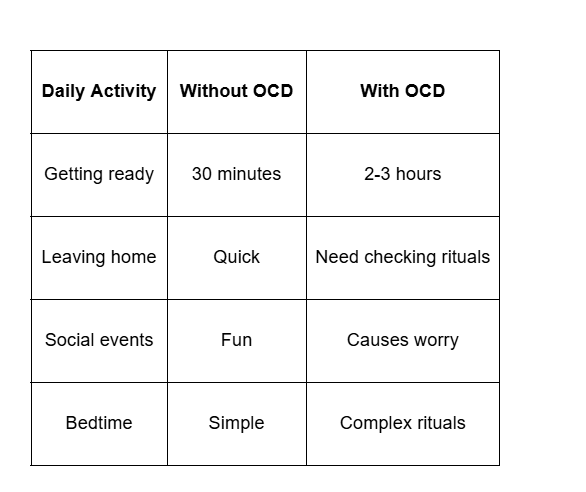
OCD symptoms show up in many daily tasks. These behaviors can be hard to get. Seeing symptoms helps partners give better support.
Obsessive Thoughts Patterns
The same thoughts play on repeat in your head. You might worry that germs are covering everything. There's a fear that something terrible will happen to your partner. Doubts creep in about whether this relationship is right. You wonder if you're secretly a terrible person. These thoughts create massive worry and fear.
Compulsive Behavior Patterns
You wash your hands until they're raw. You check the locks 5, 10, even 20 times. Items need to sit in exact spots. You ask your partner the same question repeatedly. Certain places get avoided completely. You're always fishing for reassurance about the relationship. These behaviors eat up hours every single day.
Impact on Daily Functioning
OCD in Relationships
OCD creates problems in romantic love. Partners need understanding and patience. Talking becomes key to relationship success.
How OCD Affects Partners
Partners get super frustrated by the same behaviors repeating. They can't wrap their head around OCD thinking. Giving reassurance becomes exhausting after a while. Partners start feeling like they're responsible for fixing everything. Simple stuff now takes forever to do. Being spontaneous? Forget about it. Partners end up feeling pushed aside or forgotten.
Common Relationship Symptoms of OCD
You're constantly asking if they still love you. You check their phone and messages way too much. Dates need to follow exact routines every time. Physical touch gets avoided because of germ fears. You doubt the relationship even when things are great. You can't stop comparing them to your exes.
Relationship OCD Explained
Relationship OCD floods you with doubts about your partner. You worry they're not "the one" for you. You're stuck analyzing your feelings nonstop. You keep stacking them up against other people. You're terrified of picking the wrong person. Here's the thing - these thoughts aren't your real feelings.
OCD and Relationship Problems
OCD causes specific problems in romantic love. Understanding these problems helps couples cope. Many issues can be fixed with help.
Trust and Jealousy Issues
OCD can spark jealousy out of nowhere. You're constantly checking where they are and who they're with. They need to explain every little thing they do. You suspect cheating even though there's zero evidence. This slowly chips away at trust between you two. A good therapist can really turn this around.
Communication Challenges
OCD makes it tough to say how you feel
Partners can't figure out what's going on in your head
Always needing reassurance kills normal conversation
Time and Attention Problems
OCD rituals take time away from love. Partners feel neglected when OCD becomes a priority. Quality time together goes down over time. Spontaneous activities cause too much worry. Partners grow apart due to a lack of connection. Balancing OCD management with love time is key.
OCD and Intimacy Issues
OCD really affects physical and emotional closeness. Many couples struggle with closeness challenges. Understanding these issues helps couples reconnect.
Physical Intimacy Challenges
Fear of germs makes physical contact hard. Fear of germs stops kissing or touching. Need for specific routines before closeness happens. Bad thoughts during intimate moments disrupt the connection. Avoiding closeness leads to relationship distance. These challenges affect both partners a lot.
Emotional Intimacy Barriers
Hard time sharing feelings due to shame. Fear of being judged for OCD thoughts. Constant reassurance seeking stops a deeper connection. Focus on OCD leaves little energy for the partner. Emotional distance grows when closeness goes down. Therapy helps couples rebuild emotional closeness together.
Overcoming Intimacy Problems
Start with small steps toward physical contact. Discuss your fears and concerns openly together. Work with the therapist on facing fears slowly. Set aside OCD-free time for connection daily. Practice mindfulness during intimate moments together. Patience and understanding are key for both partners.
Supporting a Partner with OCD
Partners play a big role in OCD management. The right support helps relationships stay strong. Learning how to help makes a difference.
Healthy Support Strategies
Learn about OCD to understand it better. Encourage professional treatment and therapy visits. Avoid joining in OCD rituals or seeking reassurance. Set healthy boundaries for both people. Celebrate progress, no matter how small. Practice self-care to prevent burnout. Join support groups for partners of OCD.
What Not to Do
Never criticize or mock OCD symptoms shown. Do not enable compulsions by joining in rituals. Avoid giving endless reassurance to the partner. Do not take OCD behaviors personally. Never pressure a partner to just stop behaviors. These actions make OCD worse over time.
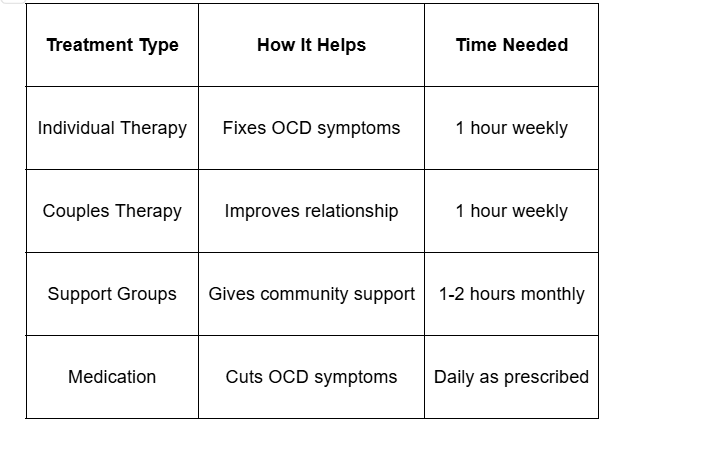
Seeking Professional Help Together
Building a Stronger Relationship
OCD does not have to destroy love. Many couples thrive despite OCD challenges. Working together makes relationships stronger.
Communication Skills
Use "I" statements when discussing feelings openly. Listen well without interrupting or judging. Express needs clearly and directly to the partner. Avoid blaming the partner for the OCD symptoms shown. Schedule regular relationship check-ins together weekly. Practice patience during hard talks.
Setting Healthy Boundaries
Decide which rituals you will not join. Limit reassurance giving to specific times only. Keep your own hobbies and friendships outside. Take breaks when feeling overwhelmed or frustrated. Say no to unreasonable requests from a partner. Boundaries help both partners in the long run.
Creating Quality Time Together
Schedule OCD-free time for fun activities
Plan dates that work with OCD limits
Focus on enjoying each other's company
Conclusion
OCD affects relationships in many ways. Understanding OCD helps partners give better support. Talking and boundaries are key to healthy love. Professional treatment cuts OCD symptoms over time. Partners need support and self-care, too. Many couples build stronger love despite OCD. Hope and help are available for all couples struggling.