
Do Pets Have Autism? How to Recognize Neurodiverse Behavior
Have you ever noticed your cat pacing endlessly, your dog obsessively chasing its tail, or your rabbit isolating itself in a corner? You might wonder: Could my pet have autism? While animals can’t be formally diagnosed with autism the way humans are, many exhibit behaviors strikingly similar to traits seen on the autism spectrum. These signs can help you provide the care, patience, and environment your neurodiverse pet needs to thrive.
In this article, we’ll explore how autism-like behaviors appear in cats, dogs, and other pets, why they happen, and practical ways to support your furry, feathered, or scaled companions.
What Is Autism in Humans?
Autism Spectrum Disorder (ASD) is a developmental condition that affects how a person perceives the world, communicates, and interacts with others. People on the spectrum may experience challenges with social interaction, display repetitive behaviors, or have heightened sensitivity to sensory input like lights, sounds, or touch.
Autism isn’t a one-size-fits-all diagnosis; it spans a wide range of traits and intensities, which is why it’s called a “spectrum.”
Understanding autism in humans helps us recognize similar patterns in animals. While pets can’t be formally diagnosed with ASD, observing their behavior can reveal signs that echo traits found in humans on the autism spectrum.
Can Animals Have Autism?
The idea of animals having autism has been debated in veterinary science and animal behavior circles for years. While there is no official medical diagnosis of autism for pets, many experts agree that some animals exhibit behaviors reminiscent of human autism.
These behaviors might include:
Avoiding social interactions
Engaging in repetitive or obsessive actions
Being unusually sensitive to sounds, touch, or light
Struggling to adapt to new routines or environments
In essence, while animals cannot be diagnosed with autism in the same way humans can, “autism-like behaviors” are very real and observable in pets. Recognizing these patterns can help pet owners provide better care, minimize stress, and create a more supportive environment.
Can Cats Have Autism?
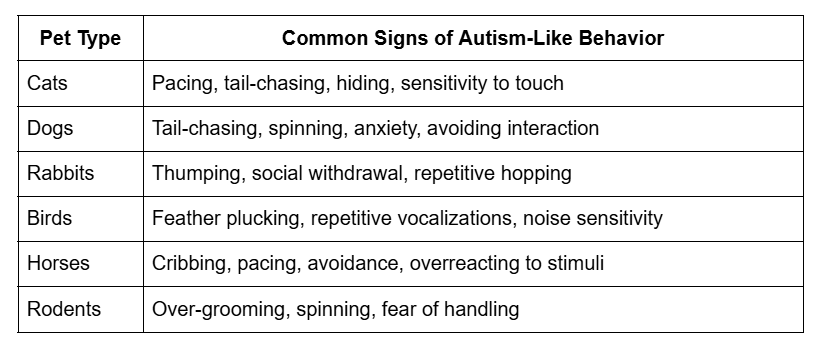
Cats are known for their independence, but some display behaviors that go beyond typical feline quirks. Signs that a cat may have autism-like traits include:
Social withdrawal: Avoiding people or other pets, hiding more than usual
Repetitive behaviors: Tail chasing, pawing at walls, or pacing in the same pattern.
Sensory sensitivities: Overreacting to sounds, touch, or changes in lighting.
Rigid routines: Extreme distress if feeding or playtime schedules change.
Experts suggest that while cats cannot receive an autism diagnosis, understanding their behavioral quirks as neurodiverse tendencies can improve their quality of life. For example, providing a calm, predictable environment and gentle socialization can help cats with autism-like traits feel safer and more confident.
Can Dogs Have Autism?
Dogs, much like humans and cats, can show behaviors that resemble autism. Some veterinarians use the term Canine Autism Spectrum Disorder (ASD) to describe these traits, though it isn’t officially recognized in veterinary medicine.
Common signs of autism-like behaviors in dogs include:
Avoiding social interaction: Not engaging with humans or other animals.
Repetitive behaviors: Tail chasing, spinning in circles, or obsessive licking.
Sensory sensitivity: Overreacting to sounds, textures, or sudden movement.
Anxiety in new environments: Difficulty adapting to changes in routine or surroundings.
Dog owners noticing these traits can support their pets through consistent routines, sensory-friendly environments, and behavior-focused enrichment activities. Understanding these signs helps prevent stress and strengthens the human-animal bond.
Autism in Other Pets
Autism-like behaviors aren’t limited to cats and dogs, other pets can also display neurodiverse tendencies. While research is limited, veterinarians and pet behaviorists have observed the following patterns:
Rabbits
Social withdrawal or hiding
Repetitive thumping
Avoiding interaction with humans
Birds
Repetitive vocalizations or mimicry
Feather plucking
Sensitivity to noise or handling
Horses
Stereotypic behaviors like cribbing or pacing
Avoidance of interaction with humans or other horses
Overreaction to stimuli
Small Rodents (Hamsters, Guinea Pigs)
Excessive grooming or repetitive spinning
Fear or avoidance of handling
Sensitivity to environmental changes
Recognizing these behaviors allows pet owners to adapt their care and create environments that reduce stress and promote natural, healthy behavior.
Signs of Autism in Pets
Recognizing autism-like behaviors in pets is the first step to supporting their well-being. While every species and individual is different, common signs include:
Repetitive behaviors: Tail chasing in cats, spinning in dogs, or excessive vocalizations in birds.
Avoidance of social interaction: Hiding, ignoring humans or other animals, or retreating to corners.
Overreaction to sensory input: Loud noises, bright lights, or touch may trigger stress or anxiety.
Rigid routines: Distress when schedules for feeding, play, or walks change.
Limited play or curiosity: Lack of interest in toys or exploring their environment.
Observing these behaviors doesn’t mean your pet is “broken” or unhealthy, they may simply be neurodiverse, requiring adjustments in their care to thrive.
Causes and Theories
While definitive research is limited, experts propose several factors that may contribute to autism-like behaviors in animals:
Genetics: Some traits may be inherited, influencing behavior patterns from birth.
Environmental Stress: Loud noises, inconsistent routines, or lack of enrichment can amplify repetitive or anxious behaviors.
Brain Development Differences: Variations in neural pathways may influence how animals perceive stimuli and interact socially.
It’s important to note that no single cause is confirmed, and much of this field remains exploratory. Research into animal neurodiversity is ongoing, and understanding these behaviors can help shape compassionate care strategies.
Caring for Neurodiverse Pets
Supporting pets with autism-like traits requires patience, observation, and tailored care. Here are practical tips for different species:
Create a predictable environment: Keep feeding, playtime, and sleep routines consistent.
Reduce overstimulation: Minimize loud noises, bright lights, and sudden changes.
Gentle socialization: Introduce new people or animals slowly, respecting the pet’s comfort level.
Provide enrichment: Toys, puzzles, and safe spaces allow pets to engage naturally.
Veterinary guidance: Consult vets or animal behaviorists for tailored support and reassurance.
By adapting your home and approach, neurodiverse pets can live happy, healthy, and fulfilling lives.
Expert Opinions & Research
While there is no official diagnosis of autism in animals, veterinarians and researchers recognize autism-like behaviors in pets:
Dr. Nicholas Dodman, a leading veterinary behaviorist, notes that dogs and cats can exhibit repetitive, compulsive behaviors similar to traits observed in human autism.
Studies in laboratory and domestic animals show that some animals have genetic and neurological differences influencing social behavior, sensitivity, and routine dependence.
Animal behaviorists emphasize environmental enrichment and consistent care as the most effective ways to support neurodiverse pets.
These insights highlight the importance of compassion, observation, and adapting care routines to meet each pet’s needs.
Final Thoughts
While animals cannot be diagnosed with autism in the human sense, many pets exhibit autism-like behaviors that influence how they interact, play, and adapt to their environment. Recognizing these traits allows owners to provide compassionate, tailored care, helping pets thrive in their own way.
Whether it’s a cat pacing in circles, a dog spinning anxiously, or a bird repeating the same sound over and over, understanding neurodiversity in pets opens the door to a closer, more empathetic bond.
By observing behaviors, adjusting environments, and seeking expert guidance when necessary, you can ensure your neurodiverse pet lives a happy, healthy, and enriched life.
FAQs
Q1: Can my cat really be autistic?
A: Cats cannot be formally diagnosed with autism, but many display behaviors resembling autism, such as repetitive actions, social withdrawal, or sensory sensitivities.
Q2: Is there a treatment for pets with autism-like traits?
A: No official treatment exists, but behavioral therapy, environmental enrichment, and consistent routines can help reduce stress and improve quality of life.
Q3: Can small pets like hamsters or guinea pigs show autism-like behaviors?
A: Yes, small pets may exhibit repetitive behaviors, over-grooming, or extreme fear responses similar to traits seen in neurodiverse animals.
Q4: How can I help a neurodiverse dog or cat?
A: Consistent routines, calm environments, gentle socialization, and enrichment activities are essential for supporting neurodiverse pets.
Q5: Are these behaviors harmful?
A: Most autism-like behaviors aren’t harmful, but consult a vet if they affect your pet’s health, eating habits, or safety.