
Schizophrenia vs. Schizoaffective Disorder: What’s the Real Difference?
Being told that you or someone you love may have schizophrenia or schizoaffective disorder can raise a flood of questions, fear, and uncertainty. These two mental health conditions are often confused because they share many symptoms, yet they are not the same diagnosis, and the differences matter. People commonly ask, “What’s the real difference?” “Which condition is worse?”, and “What does this mean for long-term treatment and quality of life?”
In this article, we clearly explain schizophrenia vs. schizoaffective disorder, breaking down symptoms, severity, diagnosis, and prognosis in simple terms, so you can better understand the condition, feel empowered, and take the next step with clarity and confidence.
What Is Schizophrenia?
Schizophrenia is a chronic and severe mental health disorder that affects how a person thinks, feels, and behaves. It is primarily classified as a psychotic disorder, meaning it involves a loss of contact with reality. People with schizophrenia may experience persistent hallucinations, delusions, and disorganized thinking that interfere with daily functioning.
This condition usually appears in late adolescence or early adulthood and requires long-term treatment and support.
Common Symptoms of Schizophrenia
Schizophrenia symptoms are typically grouped into three main categories:
Positive Symptoms
These are symptoms that add abnormal experiences, such as:
Hallucinations (hearing voices, seeing things that aren’t there)
Delusions (strong false beliefs not based in reality)
Disorganized speech or behavior
Negative Symptoms
These involve a loss of normal functioning, including:
Flat or reduced emotional expression
Social withdrawal
Lack of motivation
Difficulty experiencing pleasure
Cognitive Symptoms
These affect thinking and memory, such as:
Trouble focusing or paying attention
Poor working memory
Difficulty making decisions
Negative and cognitive symptoms are often the most disabling and may persist even when psychotic symptoms improve.
Causes and Risk Factors of Schizophrenia
There is no single cause of schizophrenia. Instead, it develops due to a combination of factors, including:
Genetic predisposition
Imbalances in brain chemicals such as dopamine
Structural and functional brain differences
Environmental stressors, such as trauma or substance use
What Is Schizoaffective Disorder?
Schizoaffective disorder is a complex mental health condition that combines symptoms of schizophrenia and a mood disorder. People with schizoaffective disorder experience psychotic symptoms similar to schizophrenia, along with significant mood episodes such as depression or mania.
The key distinction is that mood symptoms are a central and ongoing part of the illness, not just a reaction to psychosis.
Common Symptoms of Schizoaffective Disorder
People with schizoaffective disorder experience two main types of symptoms:
Psychotic Symptoms
Hallucinations
Delusions
Disorganized thinking or speech
Mood Disorder Symptoms
Depending on the type, mood symptoms may include:
Prolonged depression (sadness, hopelessness, low energy)
Mania (elevated mood, impulsivity, decreased need for sleep)
Alternating depressive and manic episodes
To meet diagnostic criteria, psychotic symptoms must occur even when mood symptoms are not present, which separates schizoaffective disorder from mood disorders with psychotic features.
Types of Schizoaffective Disorder
There are two main types:
Bipolar type: Includes manic episodes, with or without depressive episodes
Depressive type: Includes only major depressive episodes
Schizophrenia vs. Schizoaffective Disorder: Key Differences
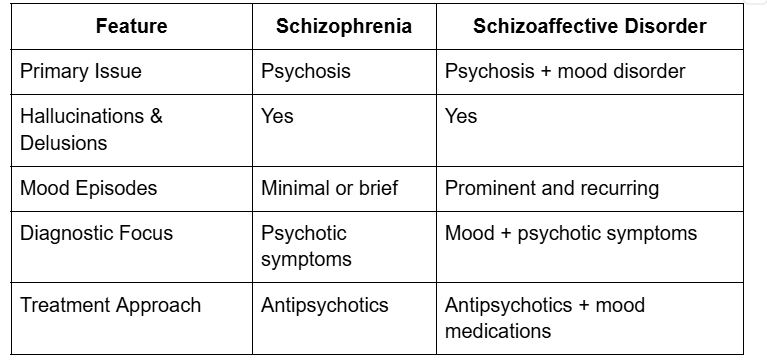
Although these conditions share similarities, they are clinically distinct diagnoses. Understanding the differences helps clarify treatment options and long-term expectations.
1. Presence of Mood Symptoms
Schizophrenia: Mood symptoms, if present, are brief and not a defining feature.
Schizoaffective disorder: Mood symptoms (depression or mania) are a core part of the condition and occur for a significant portion of the illness.
2. Pattern and Duration of Symptoms
In schizophrenia, psychotic symptoms dominate most of the illness.
In schizoaffective disorder, psychosis occurs alongside ongoing mood episodes, but also persists independently for a period of time.
3. Diagnostic Criteria Differences
Mental health professionals diagnose these conditions based on:
How long do psychotic symptoms last
Whether mood episodes are present and for how long
Whether psychosis occurs outside of mood disturbances
Because symptoms can overlap and evolve, diagnosis may change over time as patterns become clearer.
Comparison: Schizophrenia vs. Schizoaffective Disorder
Which Is Worse: Schizophrenia or Schizoaffective Disorder?
This is one of the most common and emotionally charged questions people ask. The honest answer is that neither condition is universally “worse.” Severity depends on the individual, symptom control, treatment response, and support system.
Comparing Severity and Impact
Schizophrenia is often associated with persistent negative and cognitive symptoms, which can significantly affect motivation, social functioning, and independence.
Schizoaffective disorder includes severe mood episodes that can be disruptive but may respond well to mood-stabilizing treatments.
Some individuals with schizoaffective disorder experience better overall functioning, especially when mood symptoms are well managed. Others may struggle more during intense depressive or manic episodes.
Prognosis Differences
Schizophrenia tends to be more consistently psychotic, which can make long-term functioning more challenging.
Schizoaffective disorder may have a more variable course, with periods of stability between episodes.
The prognosis is highly individual. Early diagnosis, consistent treatment, and strong support can significantly improve outcomes for both conditions.
Treatment Differences Between Schizophrenia and Schizoaffective Disorder
While treatment overlaps, the approach differs based on symptom patterns.
Medications
Schizophrenia
Antipsychotic medications are the foundation of treatment.
Long-acting injectable medications may be used for symptom stability.
Schizoaffective Disorder
Antipsychotics
Mood stabilizers (for bipolar type)
Antidepressants (for depressive type)
Therapy and Support
Both conditions benefit from:
Cognitive Behavioral Therapy (CBT)
Psychosocial rehabilitation
Family education and support
Vocational and social skills training
Treatment is most effective when it addresses both symptoms and quality of life, not just diagnosis.
Can Schizophrenia Turn Into Schizoaffective Disorder?
Diagnosis can sometimes change over time, especially in the early stages of illness. This does not mean the condition “turned into” something else, it means clinicians gained more information about symptom patterns.
As mood symptoms become clearer or more persistent, a diagnosis may be refined to ensure the most effective treatment plan.
Living With Schizophrenia vs. Schizoaffective Disorder
Daily Life and Functioning
People with either condition may face challenges such as:
Maintaining employment or education
Managing relationships
Adhering to medication routines
However, many individuals live meaningful, productive lives with proper treatment and support.
Importance of Support Systems
Strong outcomes are closely linked to:
Ongoing mental health care
Family and community support
Education about the condition
Early intervention during symptom changes
Final Note
Exploring the difference between schizophrenia and schizoaffective disorder is essential for accurate diagnosis, effective treatment, and realistic expectations. While both conditions involve psychosis, the presence and role of mood symptoms are what set them apart. Neither condition is inherently worse; outcomes depend on individualized care, early intervention, and ongoing support.
From Serenity Telehealth with Online Schizophrenia Treatment, you can achieve stability, improved functioning, and a better quality of life.
FAQs
Q: Is schizoaffective disorder a type of schizophrenia?
Ans: No. Schizoaffective disorder is a separate diagnosis that includes both psychotic and mood symptoms.
Q: Can someone have both schizophrenia and schizoaffective disorder?
Ans: No. A person can only receive one diagnosis at a time, based on symptom patterns.
Q: Is schizoaffective disorder easier to treat than schizophrenia?
Ans: Treatment response varies. Some people respond well to mood-focused treatments, while others require long-term psychosis management.
Q: Are schizophrenia and schizoaffective disorder lifelong conditions?
Ans: They are typically long-term, but symptoms can be effectively managed with consistent care.