
Schizoid Personality Disorder (SPD): Signs, Causes, and Treatment
Have you ever met someone who seems emotionally distant, prefers solitude, and rarely seeks social interaction? These traits could be more than just shyness; they may point to Schizoid Personality Disorder (SPD). SPD is a lesser-known mental health condition that affects how people experience relationships and emotions, often making social situations challenging.
While it can feel isolating for those living with it, understanding the disorder is the first step toward better coping, effective treatment, and a more fulfilling life. In this guide, we’ll break down everything you need to know about SPD, its symptoms, causes, diagnosis, treatment options, and practical strategies to manage it.
What is Schizoid Personality Disorder?
Schizoid Personality Disorder is classified as a Cluster A personality disorder, which means it is considered part of the “odd or eccentric” group of personality conditions. People with SPD often display a pattern of detachment from social relationships and a limited range of emotional expression.
It’s important to note that SPD is not schizophrenia. While both disorders may involve social withdrawal, schizophrenia often includes hallucinations or delusions, which are not characteristic of SPD. Instead, SPD primarily affects how a person interacts with others and experiences emotions, making everyday social life and relationships more challenging.
Core traits of SPD include:
Emotional detachment or flat affect
Preference for solitary activities
Limited interest in social interactions
Indifference to praise or criticism
Understanding these traits can help family, friends, and professionals approach SPD with empathy and provide the right support.
Key Symptoms of Schizoid Personality Disorder
SPD manifests in various ways, but the most common symptoms include:
Emotional coldness or detachment: Difficulty showing or feeling strong emotions, appearing aloof or indifferent.
Limited social relationships: Minimal desire for friendships, romantic relationships, or family engagement.
Preference for solitude: Enjoyment of solitary activities like reading, writing, or other hobbies that do not require social interaction.
Indifference to praise or criticism: Feedback from others rarely impacts feelings or behavior.
Difficulty expressing emotions: Challenges in communicating feelings verbally or nonverbally, often appearing distant or reserved.
These symptoms typically begin in early adulthood and persist over time. They can sometimes be mistaken for introversion, but the difference lies in the intensity and persistence of detachment and social disinterest.
Causes and Risk Factors of SPD
The exact cause of Schizoid Personality Disorder is not fully understood, but research suggests a combination of genetic, environmental, and psychological factors may contribute:
Genetic factors: A family history of personality disorders or mental health conditions can increase susceptibility.
Early childhood experiences: Emotional neglect, lack of parental warmth, or overprotective parenting may influence personality development.
Biological factors: Brain structure and chemical imbalances may play a role in emotional regulation and social behavior.
Personality traits: Some individuals may naturally lean toward introversion or detachment, which can evolve into SPD in certain conditions.
Risk factors to consider:
Male gender (SPD is diagnosed more frequently in men)
History of family members with mental health disorders
Childhood environments lacking emotional support or social interaction
Understanding the potential causes and risk factors helps in early identification and support for those affected.
How is Schizoid Personality Disorder Diagnosed?
Diagnosing SPD requires a comprehensive evaluation by a mental health professional. There is no blood test or imaging that can confirm the disorder; diagnosis is based on behavioral patterns and clinical assessment.
Key steps in the diagnostic process include:
Clinical interviews: Discussing personal history, social habits, and emotional experiences with a psychologist or psychiatrist.
Assessment of DSM-5 criteria: The American Psychiatric Association’s DSM-5 outlines specific criteria for SPD, such as persistent detachment from relationships and restricted emotional expression.
Ruling out other conditions: Professionals differentiate SPD from similar disorders, including schizophrenia, avoidant personality disorder, and depression.
Psychological questionnaires: Standardized tools may be used to evaluate personality traits and symptom severity.
Early diagnosis can make a significant difference, allowing individuals to access coping strategies, therapy, and supportive interventions before social isolation or emotional difficulties become overwhelming.
Treatment and Management Options
While Schizoid Personality Disorder can be challenging, it is manageable with the right approach. Treatment primarily focuses on therapy and supportive interventions rather than medication, unless associated conditions like anxiety or depression are present.
Effective treatment options include:
Psychotherapy:
Cognitive-behavioral therapy (CBT) and supportive therapy help individuals recognize thought patterns, improve social skills, and develop emotional awareness. Therapy provides a safe space to explore feelings without pressure.Social Skills Training:
Structured exercises help individuals gradually improve communication, build confidence in interactions, and navigate social situations more effectively.Medication:
While there is no specific drug for SPD, antidepressants or anti-anxiety medications may be prescribed if coexisting conditions like depression or anxiety occur.Supportive Counseling:
Encourages lifestyle adjustments, stress management, and gradual social engagement, helping individuals lead more fulfilling lives.
Early intervention improves long-term outcomes, reduces social isolation, and empowers individuals to maintain meaningful connections at their own pace.
Coping Strategies for People with SPD
Living with SPD can feel isolating, but adopting practical coping strategies can make a significant difference:
Create a Structured Routine: Predictable daily habits reduce stress and improve focus, making social interactions less overwhelming.
Engage in Solitary Hobbies: Pursuing interests like reading, writing, or creative arts provides fulfillment without the pressure of socializing.
Gradual Social Exposure: Start with low-stakes interactions and gradually increase social involvement to build confidence.
Mindfulness and Self-Care Practices: Meditation, journaling, and physical exercise help manage stress, improve emotional awareness, and maintain mental health.
Seek Professional Support: Therapy or support from Serenity Telehealth can provide guidance, reduce isolation, and offer practical tools for daily life.
These strategies allow people with SPD to balance their need for solitude with the benefits of social engagement, improving overall quality of life.
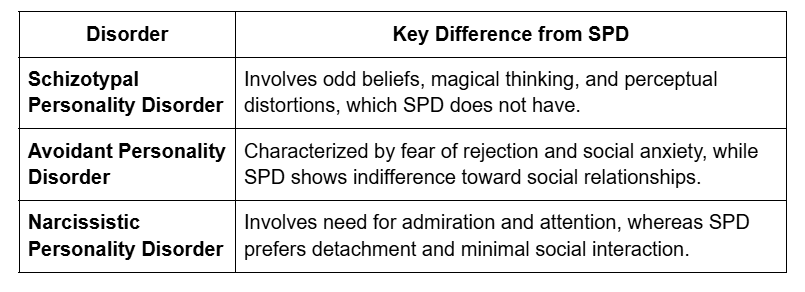
Differences Between Schizoid and Other Personality Disorders
SPD shares some traits with other personality disorders, but key differences exist
Living with Schizoid Personality Disorder
People with SPD can lead fulfilling and meaningful lives when they understand their needs and limitations. Challenges may include navigating relationships, employment, or emotional expression, but with awareness and support:
Individuals can excel in solitary careers such as writing, research, or computer programming.
Maintaining low-pressure social interactions can help build meaningful connections without stress.
Therapy and self-awareness can improve emotional recognition, allowing better understanding of personal feelings and others’ emotions.
Living with SPD is not about “curing” detachment but finding a balance between solitude and meaningful engagement in life.
Conclusion
Schizoid Personality Disorder may make social interactions and emotional expression challenging, but it does not define a person’s potential. Understanding its symptoms, causes, and treatment options empowers individuals and families to take proactive steps toward well-being. With therapy, coping strategies, and gradual social engagement, people with SPD can lead fulfilling lives that honor their need for solitude while nurturing meaningful connections.
If you or someone you know shows signs of SPD, seeking professional guidance is the first step toward understanding, support, and a better quality of life.
FAQs
Q1: Can someone with SPD form relationships?
Ans: Yes, although forming relationships may be challenging. With understanding partners and gradual exposure, meaningful connections are possible.
Q2: Is SPD the same as schizophrenia?
Ans: No. SPD is a personality disorder characterized by emotional detachment, while schizophrenia involves hallucinations, delusions, and severe cognitive disruptions.
Q3: Can SPD be cured?
Ans: There is no cure, but therapy, coping strategies, and support can significantly improve quality of life.
Q4: How common is Schizoid Personality Disorder?
Ans: SPD is relatively rare, affecting approximately 3-5% of the population, and is more frequently diagnosed in men.
Q5: What jobs are suitable for someone with SPD?
Ans: Careers that allow independence and minimal social interaction, like research, IT, creative arts, or technical roles, often suit people with SPD.