
Anxiety Attack vs Panic Attack
Do you feel sudden fear and worry? Are you confused about anxiety and panic? Many people use these terms the same way. But anxiety attacks and panic attacks are different. About 40 million adults in the US have anxiety disorders. Around 6 million people experience panic disorder annually. Understanding the difference helps you get proper treatment.
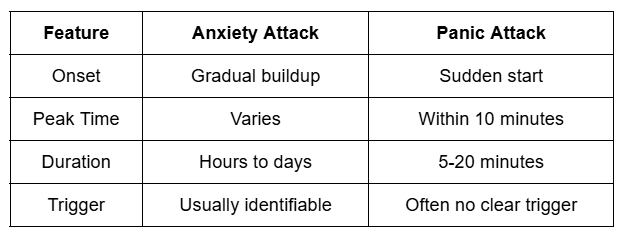
Anxiety attacks build up slowly over time. Panic attacks come suddenly without any warning. Both cause physical symptoms like a fast heartbeat. Studies show 28% of people will experience anxiety disorder. Panic attacks affect 11% of adults each year. Women are twice as likely to have panic attacks. The symptoms may look similar, but they are not the same.
This guide explains anxiety attacks versus panic attacks clearly. We show the key differences between them. You will learn symptoms and treatment options. Recognizing the difference is the first step to help. Proper diagnosis leads to better treatment outcomes. Most people can manage both conditions with proper care. Knowledge empowers you to seek the right help.
Understanding Anxiety Attacks
Anxiety attacks develop gradually over time. They connect to specific stressors or worries. Understanding anxiety helps you manage symptoms better.
What is an Anxiety Attack
An anxiety attack is intense worry and fear. It builds up slowly over minutes or hours. The feeling connects to specific triggers or stressors. Symptoms can last for extended time periods. Anxiety attacks are not a medical diagnosis. The term describes periods of heightened anxiety symptoms. Most people experience some anxiety in life.
Common Symptoms of Anxiety
Worry and nervousness that will not go away. Racing thoughts about potential problems or dangers. Muscle tension, especially in the neck and shoulders. Fatigue and trouble sleeping through the night. Difficulty concentrating on tasks at hand. Restlessness and feeling on edge constantly. Irritability with people around you increases.
Triggers for Anxiety
Work stress and deadline pressure build anxiety. Financial worries about bills and expenses mount. Relationship problems cause ongoing worry and concern. Health concerns trigger anxiety about medical issues. Major life changes create uncertainty and fear. Past trauma can trigger anxiety symptoms later. Social situations may cause anxiety for some.
Understanding Panic Attacks
Panic attacks strike suddenly without any warning. They peak within minutes and feel intense. Understanding panic helps reduce the fear of attacks.
What is a Panic Attack
A panic attack is a sudden, intense fear. It comes on quickly without obvious triggers. The attack peaks within 10 minutes usually. Physical symptoms feel very overwhelming and scary. People often fear they are having a heart attack. The intense fear creates a sense of doom. Panic attacks are recognized as a medical diagnosis.
Common Symptoms of Panic
Heart races or pounds very hard suddenly. Chest pain or discomfort feels very scary. Shortness of breath makes breathing feel hard. Sweating occurs even in cool temperatures. Trembling or shaking happens throughout the body. Dizziness or lightheadedness makes you feel faint. Fear of dying or losing control overwhelms.
Panic Attack Duration
Panic attacks peak within 10 minutes of starting. Most attacks last between 5 and 20 minutes. Some symptoms may linger for an hour. The intense fear usually passes relatively quickly. Physical symptoms may take longer to disappear. Multiple attacks can happen in one day. Recovery time varies significantly between different people.
Key Differences Between Anxiety and Panic Attacks
Understanding the differences helps with proper treatment. Each condition needs different management approaches.
Onset and Duration
Intensity of Symptoms
Anxiety symptoms range from mild to severe. Panic symptoms are typically very intense, always. Anxiety feels like persistent worry and tension. Panic feels like immediate danger or death. Anxiety allows some daily functioning to continue. Panic often completely disrupts what you are doing. Anxiety builds gradually over longer periods.
Triggers and Causes
Anxiety usually has identifiable triggers, you know. Panic often occurs without an obvious cause or reason. Anxiety connects to specific worries or situations. Panic can happen during calm or stressful times. Anxiety relates to future concerns and worries. Panic feels like an immediate threat right now.
Diagnostic Criteria
Medical professionals use specific criteria for diagnosis. Proper diagnosis ensures you get the right treatment.
Anxiety Disorder Diagnosis
Excessive worry occurs more days than not. Worry persists for at least six months consistently. Difficulty controlling the worry despite trying hard. Three or more physical symptoms present regularly. Symptoms cause significant distress or impairment daily. Symptoms not due to substances or medications.
Panic Disorder Diagnosis
Recurrent unexpected panic attacks happen repeatedly over time. At least one month of worry about attacks. Worry about having another panic attack continues. Significant behavior changes to avoid future attacks. Fear of situations where attacks might occur. Attacks not due to substances or medications.
Importance of Professional Diagnosis
Self-diagnosis can lead to wrong treatment approaches. Mental health professionals use standardized assessment tools. Proper diagnosis considers your full medical history. Other conditions may mimic anxiety or panic. Professional help ensures accurate diagnosis and treatment.
Treatment Options
Both conditions respond well to proper treatment. Different approaches work for different people. Combination treatments often work best overall.
Therapy Approaches
Cognitive behavioral therapy helps identify thought patterns. Exposure therapy gradually face feared situations safely. Acceptance and commitment therapy teaches mindfulness skills. Psychotherapy explores the underlying causes of anxiety. Group therapy provides support from others experiencing similar situations.
Medication Options
SSRIs help reduce anxiety and panic symptoms
Benzodiazepines provide quick relief for panic attacks
Beta-blockers reduce physical symptoms like a racing heart
Self-Help Strategies
Deep breathing exercises calm nervous system responses. Regular exercise reduces anxiety and stress levels. Adequate sleep improves mood and coping ability. Limiting caffeine and alcohol helps reduce symptoms. Meditation and mindfulness reduce overall anxiety levels. Social support from friends and family helps.
When to Seek Help
Knowing when to get professional help matters. Early intervention prevents symptoms from worsening over time. Do not wait until a crisis to seek help.
Warning Signs
Symptoms interfere with daily life and activities. Avoiding situations due to fear of attacks. Using alcohol or drugs to cope with symptoms. Thoughts of self-harm or suicide occur. Physical symptoms seem like a medical emergency. Unable to function at work or school. Relationships suffer due to anxiety or panic.
Emergency Situations
Chest pain that feels like a heart attack. Difficulty breathing that does not improve quickly. Thoughts of harming yourself or others immediately. Severe panic that does not subside at all. First panic attack when you do not know. Panic, combined with other concerning symptoms, appears. Any time you feel you need immediate help.
Finding Professional Help
Start with a primary care doctor for initial evaluation. Ask for a referral to a mental health specialist. Check insurance coverage for mental health services. Look for therapists specializing in anxiety disorders. Crisis hotlines provide immediate support when needed. Online directories help find local mental health providers.
Conclusion
Anxiety attacks versus panic attacks have important differences. Understanding these differences helps you get proper treatment. Both conditions are treatable with professional help. Early intervention improves outcomes significantly for recovery. Do not suffer alone when help is available. Reach out to a mental health professional for support. Recovery is possible with proper care and treatment.
FAQs
Are panic attacks and anxiety attacks the same? No, they have different onset, duration, and intensity levels. Panic attacks come suddenly and peak within 10 minutes. Anxiety attacks build gradually over longer time periods. The symptoms and treatment approaches differ between the two.
How long does a panic attack last? Most panic attacks last between 5 to 20 minutes total. The attack peaks within the first 10 minutes, usually. Some symptoms may linger for up to an hour. The intense fear typically passes relatively quickly, though.
Can you have both anxiety and panic attacks? Yes, many people experience both types of attacks regularly. Having one condition increases the risk for the other. About 50% of people with panic disorder also have anxiety.
What triggers a panic attack? Panic attacks often occur without clear triggers or warnings. Sometimes they happen during calm or relaxing moments. Stress, caffeine, and lack of sleep can increase risk.
Is an anxiety attack a medical diagnosis? No, an anxiety attack is not an official medical diagnosis. However, anxiety disorder is a recognized medical condition. Doctors use anxiety disorders for diagnosis and treatment.