
Symptoms of ADHD: A Complete Guide 2025
Did you know that ADHD affects over 366 million adults worldwide? Are you surprised that 8.4% of children have an ADHD diagnosis? Would you believe that 60% of childhood ADHD continues into adulthood? Studies show 75% of ADHD cases remain undiagnosed in adults. Research indicates early diagnosis improves life quality by 70%. People with untreated ADHD earn 33% less income on average. Proper treatment helps 80% of people manage symptoms successfully.
Do you struggle to focus on important tasks every single day? Do you forget appointments, deadlines, and conversations regularly? Are you constantly losing keys, phone, or other important items? Many people with ADHD don't realize they have the condition. They blame themselves for being lazy or irresponsible. Undiagnosed ADHD causes problems at work and school. Relationships suffer because of forgotten plans. Adults often struggle for years without knowing why life feels so hard.
Recognizing ADHD symptoms is the first step to getting help. Proper diagnosis leads to effective treatment options. Medication helps 70-80% of people control their symptoms. Therapy and lifestyle changes improve focus. 85% of treated patients report significant life improvements. This comprehensive guide explains ADHD symptoms in simple, clear terms. You'll learn signs in children and adults, plus when to seek professional help.
What is ADHD
ADHD is a brain disorder that affects attention. It impacts how people focus and control their behavior. The condition usually starts in childhood.
Understanding ADHD Basics
ADHD affects brain development and function a lot. The condition makes focusing very difficult for people. Impulse control becomes challenging with this disorder. Hyperactivity causes excessive movement and restlessness. ADHD is not caused by bad parenting. Brain chemistry differences cause ADHD symptoms to appear.
Types of ADHD
The inattentive type causes focus and attention problems. The hyperactive type causes excessive movement and impulsivity. The combined type has both inattention and hyperactivity symptoms. Each type presents differently in people affected. Doctors diagnose type based on symptom patterns.
Common Misconceptions
ADHD is not just a childhood disorder. Adults can have ADHD throughout life. The condition is not caused by too much sugar. ADHD is not the result of laziness. People with ADHD cannot just try harder. Medication is not the only treatment option. Understanding facts helps reduce stigma around ADHD.
Signs and Symptoms of ADHD
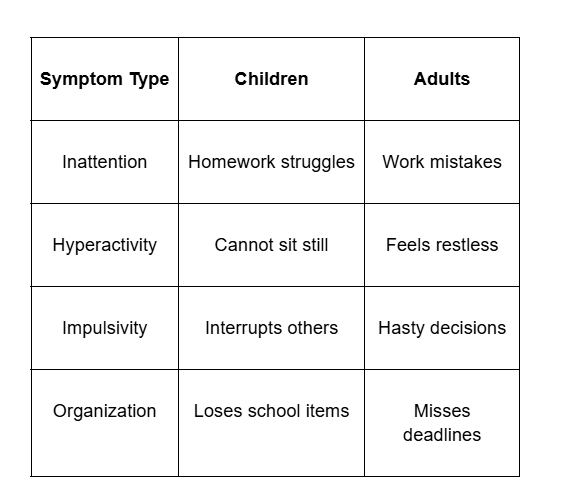
ADHD symptoms fall into three main categories. Recognizing signs helps with early diagnosis and treatment. Symptoms vary a lot between children and adults.
Inattention Symptoms
Hard to pay attention to details in tasks. Making careless mistakes in schoolwork or work. Trouble staying focused during talks or activities. Not listening when spoken to directly by others. Failing to finish tasks or follow through. Avoiding tasks needing sustained mental effort always. Losing things needed for tasks a lot.
Hyperactivity Symptoms
Fidgeting with hands or feet all the time. Unable to stay seated when needed to. Running or climbing in the wrong situations a lot. Hard to play or engage quietly in activities. Always on the go as if driven. Talking a lot without stopping to listen. These symptoms are more visible in children. Adults may feel internal restlessness instead.
Impulsivity Symptoms
ADHD Symptoms in Children
Children show ADHD symptoms differently from adults. Early recognition helps with school success. Parents and teachers notice symptoms first.
Academic and School Signs
Hard to complete homework on time. Trouble following multi-step directions. Losing school supplies and homework often. Hard to organize tasks and activities at school. Poor performance despite normal intelligence levels. Struggling to wait turn during class activities.
Social and Behavioral Signs
Hard to make and keep friends at school. Acting without thinking about the results of actions. Trouble controlling emotions during frustrating situations. Excessive talking disrupts classroom learning environments. Physical aggression when frustrated or angry sometimes. Hard to follow rules during games or activities.
Home Behavior Patterns
Refusing to do chores or homework
Arguing with parents about rules a lot
Unable to play quietly without help
ADHD Symptoms in Adults
Adults with ADHD face unique challenges daily. Many were not diagnosed as children before. Symptoms may look different in adulthood now.
Work and Career Challenges
Hard to meet deadlines at work. Trouble prioritizing tasks and managing time well. Making careless errors in important work documents. Hard to stay organized with paperwork and files. Often change jobs due to performance issues and focus. Hard to advance in career despite strong abilities.
Relationship and Social Issues
Forgetting important dates like anniversaries or birthdays. Not listening during talks with loved ones. Interrupting a partner or friend when they talk. Making impulsive decisions that affect family finances. Emotional outbursts during disagreements or arguments often occur.
Daily Life Struggles
Chronic lateness to appointments and social events. Hard to manage household finances and pay bills. Losing important items like keys or a wallet. Facing trouble in completing household chores and tasks. Hard to maintain routines and healthy habits. Problems with time management in daily activities.
How to Know if You Have an Attention Disorder
Recognizing ADHD symptoms is the first step. Self-assessment helps determine if an evaluation is needed. Professional diagnosis is essential for proper treatment.
Self-Assessment Questions
Are you easily distracted during talks or work? Do you make careless mistakes a lot at work? Do you interrupt others when they are speaking? Do you have a hard time organizing tasks and activities? Do you feel restless or fidgety most days? Do you make impulsive decisions you later regret?
When to Seek Professional Help
Symptoms interfere with daily functioning at work. Relationships are suffering due to attention or behavior issues. Hard to manage responsibilities. Multiple areas of life are affected. Family members express concern about your behavior. Academic or work performance is declining over time.
Diagnostic Process
Complete medical history and physical exam
Psychological testing and behavioral assessments
Info from family members and close contacts
Treatment Options for ADHD
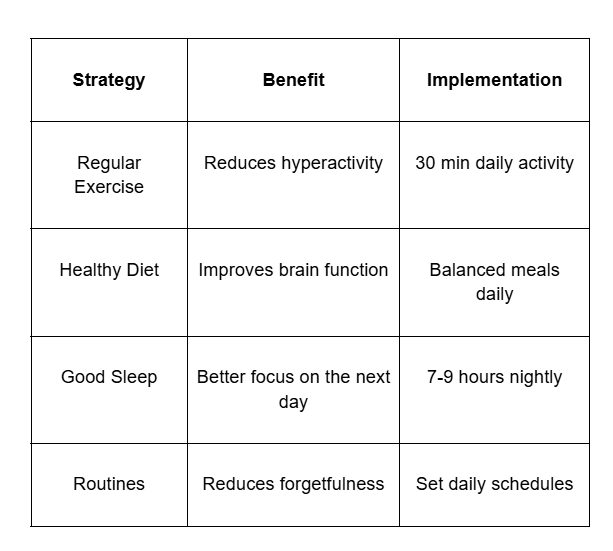
ADHD is treatable with proper medical care. Multiple treatment approaches exist for management. Combination therapy often works best for symptoms.
Medication Options
Stimulant medications help improve focus and attention. Non-stimulant medications are available for some people. Medications balance brain chemicals to reduce symptoms. Dosage adjusted based on individual response patterns. Medication combined with therapy for the best results.
Behavioral Therapy
Cognitive behavioral therapy helps manage ADHD symptoms. Therapy teaches strategies for daily challenges. Skills training improves organization and time management. Parent training helps manage child ADHD behaviors. Family therapy improves communication and reduces conflicts.
Lifestyle Changes
Living with ADHD
ADHD is a lifelong condition needing management. Many people with ADHD live successful lives. Support systems help manage symptoms well daily.
Coping Strategies
Use calendars and reminders for important appointments. Break large tasks into smaller, manageable steps. Create organized systems for paperwork and belongings. Set timers to stay on track with tasks. Use noise-canceling headphones to reduce distractions around.
Support Systems
Join ADHD support groups for connection and advice. Work with an ADHD coach for accountability and strategies. Build strong relationships with understanding healthcare providers. Connect with others who have ADHD experiences. Seek workplace accommodations when needed for success.
Success Stories
Many successful entrepreneurs have ADHD symptoms
Creative professionals often have ADHD traits
Athletes with ADHD excel in sports
Conclusion
ADHD symptoms include inattention, hyperactivity, and impulsivity issues. Signs appear differently in children and adults a lot. Early recognition and diagnosis improve outcomes greatly over time. Multiple treatment options exist, including medication and therapy. Lifestyle changes support symptom management well daily. Living with ADHD is manageable with proper support. Understanding symptoms is the first step to help.
FAQs
What are the main symptoms of ADHD?
Inattention, hyperactivity, and impulsivity are the main symptoms. People with ADHD may struggle to focus on tasks. They may fidget constantly or act without thinking. These symptoms must be present for at least six months.
Can adults have ADHD?
Yes, many adults have ADHD throughout their lives. ADHD does not go away with age. Adults may have learned to cope with symptoms better. However, challenges often persist in work and relationships.
How is ADHD diagnosed?
Through a comprehensive evaluation by a qualified healthcare professional. The doctor reviews symptoms, medical history, and behavior patterns. They may use rating scales and psychological tests.
Is ADHD caused by bad parenting?
No, ADHD is a brain disorder, not caused by parenting. Research shows ADHD has genetic and neurological causes. Brain structure and chemistry differ in people with ADHD.
Can ADHD be cured?
No, but symptoms can be managed well with treatment. ADHD is a lifelong condition for most people. With proper treatment, people can lead successful lives. Many develop strategies to cope with their symptoms effectively.