
Unipolar Depression: How to Recognize, Diagnose, and Treat It
Depression isn’t just feeling sad; it’s a heavy weight that can make everyday life feel impossible. If you’ve been struggling with persistent low mood, loss of interest in things you once enjoyed, or constant fatigue, you might be experiencing unipolar depression, also known as major depressive disorder.
Unlike bipolar depression, unipolar depression doesn’t involve manic or high-energy episodes; it’s a one-sided battle that can quietly take over your life. The good news? Unipolar depression is treatable, and understanding your symptoms, causes, and treatment options is the first step toward reclaiming your life.
In this article, we’ll break down everything you need to know in a clear, compassionate way, so you can identify the signs, understand the root causes, and explore effective treatments that actually work.
What Is Unipolar Depression?
Unipolar depression is a mood disorder characterized by persistent feelings of sadness or emptiness without the highs of mania that occur in bipolar disorder. The term “unipolar” refers to having only one “pole” of mood, depression, rather than the alternating poles of depression and mania found in bipolar disorder.
People with unipolar depression may experience periods where they seem okay or even happy, but their depressive symptoms can return without warning. Unlike temporary sadness or situational stress, unipolar depression interferes with daily life, work, relationships, and overall well-being.
Unipolar depression is another name for major depressive disorder (MDD). It’s one of the most common mental health conditions worldwide, but it is treatable with the right support.
Unipolar Depression Symptoms
Symptoms of unipolar depression can vary from person to person, and they aren’t always easy to recognize, even in yourself. Some of the most common signs include:
Emotional Symptoms
Persistent sadness or emptiness: Feeling down for most of the day, nearly every day.
Loss of interest or pleasure: Hobbies, work, and social activities that once brought joy may no longer feel engaging.
Irritability or agitation: Feeling on edge or frustrated over minor events.
Feelings of guilt or worthlessness: Harsh self-criticism or an overwhelming sense of failure.
Physical Symptoms
Changes in appetite or weight: Significant gain or loss without trying.
Sleep disturbances: Trouble falling asleep, staying asleep, or oversleeping.
Fatigue or low energy: Feeling exhausted, even after adequate rest.
Slowed movements or speech: Physical slowness that can make daily tasks harder.
Cognitive Symptoms
Difficulty concentrating or making decisions: Feeling mentally “foggy.”
Recurring thoughts of death or suicide: Any thoughts of self-harm are a medical emergency.
What Causes Unipolar Depression?
Unipolar depression is complex, and there isn’t a single cause. Instead, it’s typically a combination of genetic, biological, psychological, and environmental factors.
Genetic Factors: Having a family history of depression can increase your risk. If a close relative has struggled with major depression, you may be more susceptible.
Brain Chemistry: Neurotransmitters, chemicals in the brain like serotonin, dopamine, and norepinephrine, play a role in mood regulation. Imbalances in these chemicals are linked to depressive symptoms.
Trauma and Stress: Childhood abuse, loss of a loved one, financial stress, or major life transitions can trigger unipolar depression in vulnerable individuals.
Medical Conditions: Certain illnesses, such as thyroid disorders, chronic pain, or hormonal imbalances, can contribute to depressive symptoms.
Environmental Factors: Isolation, lack of sunlight, or ongoing stress at work or home can exacerbate depressive tendencies.
Diagnosis of Unipolar Depressive Disorder
Getting an accurate diagnosis is the first step toward recovery. There isn’t a single test for unipolar depression. Instead, doctors use a combination of:
Medical evaluation: To rule out conditions like thyroid disease or vitamin deficiencies that mimic depression.
Psychiatric assessment: Reviewing mood, behavior, sleep patterns, and appetite changes.
DSM-5 Criteria: According to the Diagnostic and Statistical Manual of Mental Disorders (DSM-5), a diagnosis of major depressive disorder requires five or more symptoms (including either depressed mood or loss of interest) lasting at least two weeks.
Symptoms Checklist for Diagnosis
Depressed or irritable mood most of the day
Loss of interest or pleasure in activities
Significant weight or appetite change
Sleep problems (insomnia or hypersomnia)
Fatigue or low energy
Psychomotor changes (agitation or retardation)
Feelings of worthlessness or excessive guilt
Difficulty thinking or concentrating
Recurrent thoughts of death or suicide
Note: Symptoms must not be caused by bipolar disorder, another health condition, or medication, and they must cause significant distress or impairment in daily life.
How Does Unipolar Depression Differ from Bipolar Depression?
One of the most common questions is: “How do I know if it’s unipolar or bipolar depression?” The key difference lies in mood cycles:
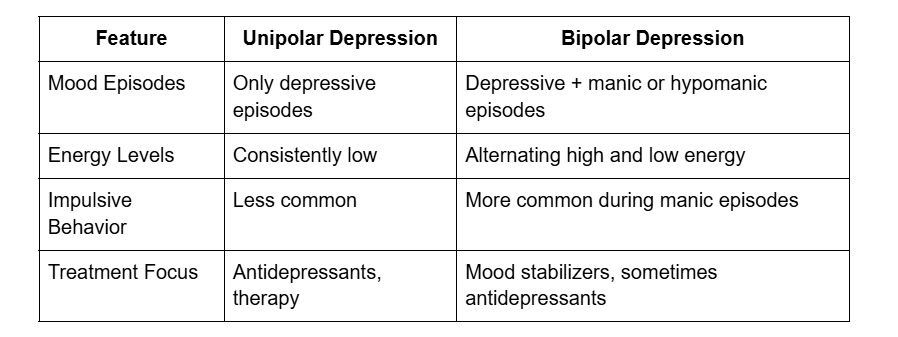
While unipolar depression involves persistent low mood, people with bipolar disorder experience extreme highs (mania) alongside depressive lows. Misdiagnosing bipolar disorder as unipolar depression can lead to ineffective treatment, so a thorough evaluation by a mental health professional is essential.
If your mood ever spikes unusually high, involves risky behaviors, or you feel unstoppable, it’s important to discuss this with a doctor to rule out bipolar disorder.
Treatment for Unipolar Depression
Treating unipolar depression is rarely a one-size-fits-all approach. Most effective plans combine medication, therapy, and lifestyle changes.
1. Medication
Antidepressants are often the first line of treatment. These medications work by balancing brain chemicals like serotonin, norepinephrine, and dopamine. Common options include:
SSRIs (Selective Serotonin Reuptake Inhibitors): Often the first choice due to safety and tolerability.
SNRIs (Serotonin-Norepinephrine Reuptake Inhibitors): Useful when SSRIs aren’t enough.
Tricyclic Antidepressants (TCAs): Older class, sometimes used if other medications fail.
MAOIs (Monoamine Oxidase Inhibitors): Effective but require dietary restrictions.
Atypical Antidepressants: Includes bupropion or mirtazapine, tailored to specific symptoms like fatigue or insomnia.
Important: Medication effectiveness varies per person. It can take weeks to feel improvement, and dosage adjustments may be necessary under a doctor’s supervision.
2. Psychotherapy (Talk Therapy)
Therapy is a cornerstone of treatment for unipolar depression. It helps you:
Understand and manage overwhelming emotions
Identify negative thought patterns
Build coping skills for daily challenges
Evidence-based therapies include:
Cognitive Behavioral Therapy (CBT): Focuses on changing negative thought patterns.
Interpersonal Therapy (IPT): Addresses relationship or social stressors that contribute to depression.
Consistency is key. Regular sessions and active participation can dramatically improve outcomes.
3. Lifestyle Changes
Small but consistent lifestyle adjustments can complement medication and therapy:
Diet: A nutrient-rich, balanced diet (like the Mediterranean diet) can improve mood and energy.
Exercise: Regular physical activity releases endorphins and serotonin, improving mental health.
Sleep: Prioritize 7–9 hours of quality sleep each night.
Routine: Maintaining daily structure, even small tasks, helps regulate mood.
Social Connections: Interacting with supportive friends or support groups reduces isolation and loneliness.
Coping Strategies & Self-Help Tips
Managing unipolar depression daily can feel overwhelming, but small strategies make a difference:
Practice Mindfulness & Meditation: Helps reduce stress and emotional reactivity.
Limit Alcohol and Drugs: Substances can worsen depressive symptoms.
Track Your Mood: Journaling helps identify triggers and monitor progress.
Set Small Goals: Achievable daily tasks provide a sense of accomplishment.
Seek Support: Connecting with loved ones or mental health groups reinforces emotional resilience.
Remember: You don’t have to manage depression alone. Support is available, and seeking help is a sign of strength.
Final Thoughts
Living with unipolar depression can feel isolating, but help is available, and recovery is possible. By recognizing the signs, understanding causes, and pursuing treatment tailored to your needs, you can reclaim your life from depression.
Remember: early intervention makes a huge difference. Don’t hesitate to reach out to a mental health professional if you or a loved one is struggling. Your mental health matters, and taking that first step toward help is a powerful act of self-care.
If you’re experiencing persistent depressive symptoms or suicidal thoughts, contact our psychiatric nurse practitioner for online depression treatment now. You deserve support and relief.
FAQs
Q1. Is unipolar depression curable?
Ans: While there’s no permanent “cure,” unipolar depression is highly treatable. Many people recover fully with therapy, medication, and lifestyle changes.
Q2. Can unipolar depression turn into bipolar disorder?
Ans: Generally, no, but misdiagnosis can occur. Bipolar disorder involves manic or hypomanic episodes that are not present in unipolar depression.
Q3. How long does unipolar depression last?
Ans: It varies widely. Some episodes may last weeks, while chronic cases can persist for years if untreated. Treatment often shortens duration and reduces severity.
Q4. What is the best therapy for unipolar depression?
Ans: Cognitive Behavioral Therapy (CBT) and Interpersonal Therapy (IPT) are widely recognized as effective, especially when combined with medication.